



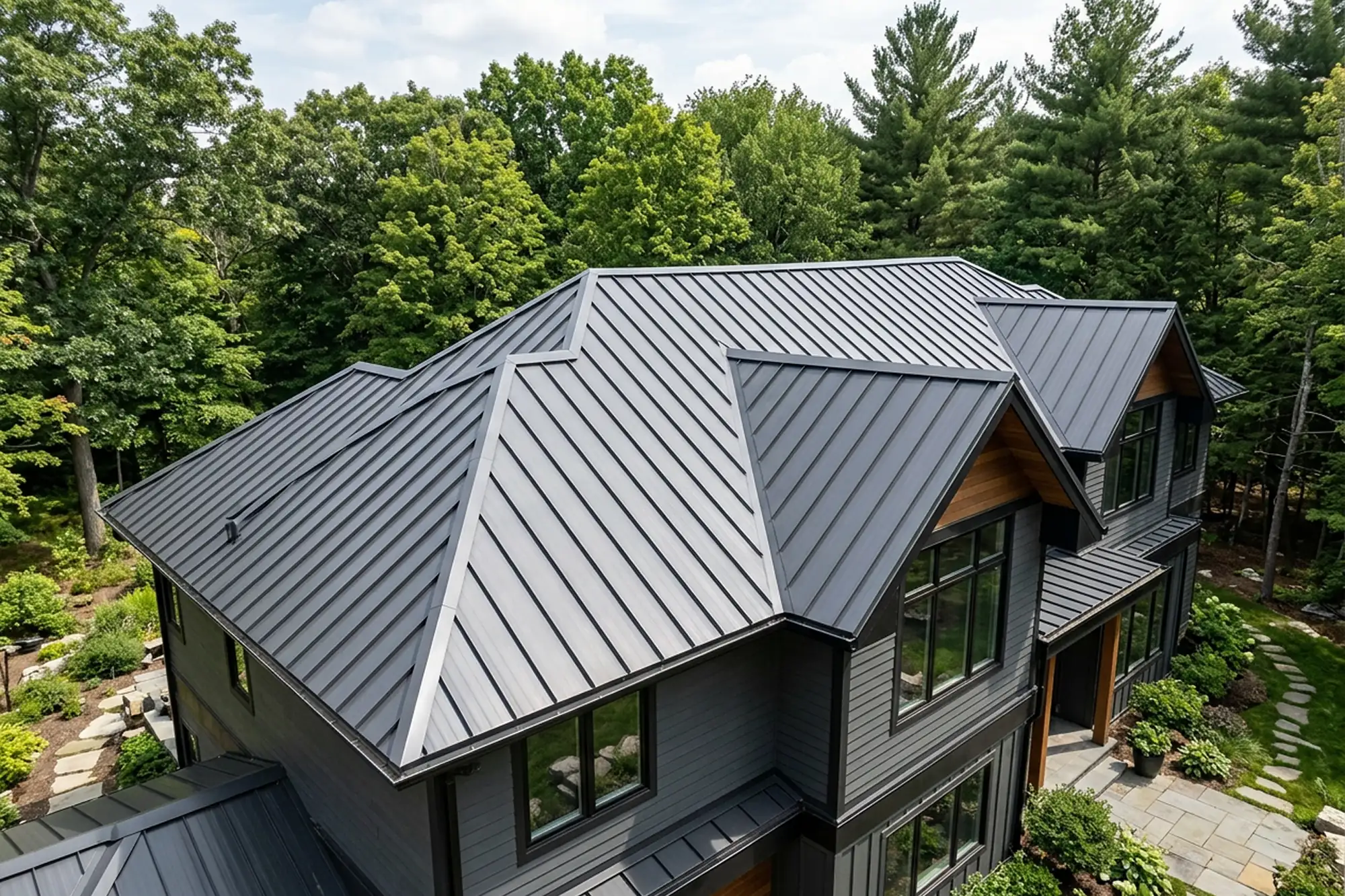
“Metal roofing” isn’t one product. It’s a category, and the three main types inside it, standing seam, metal shingles and corrugated panels, look different, install different and suit different buildings. At Jerry’s Roofing and Renovation, we work with all three across Toronto and the GTA, and the question we hear most often is some version of “aren’t they all just metal roofs?” They aren’t, and the differences matter more than most homeowners expect going in.
This guide breaks down what separates the three, where each one earns its place, and how we help clients land on the right one before a single panel goes on the roof.
Why the Distinction Matters
Picking “metal roofing” without picking a type is a bit like picking “a car” without deciding between a sedan, a truck and a hatchback. They’re all metal roofing systems, but the panel profile, the fastening method and the look on the building end up worlds apart. Getting this wrong doesn’t just affect curb appeal. It affects how the roof handles snow load, how long the finish lasts and what a future repair actually involves.
Here’s how the three break down.
Climate is part of this decision too. A roof facing open exposure to lake winds off the Etobicoke shoreline deals with different stress than a sheltered infill build in North York with mature tree cover overhead. Panel profile, fastening method and finish coating all interact with that exposure differently, which is part of why we look at the site before recommending a type rather than defaulting to one product across every job.
Standing Seam Panels
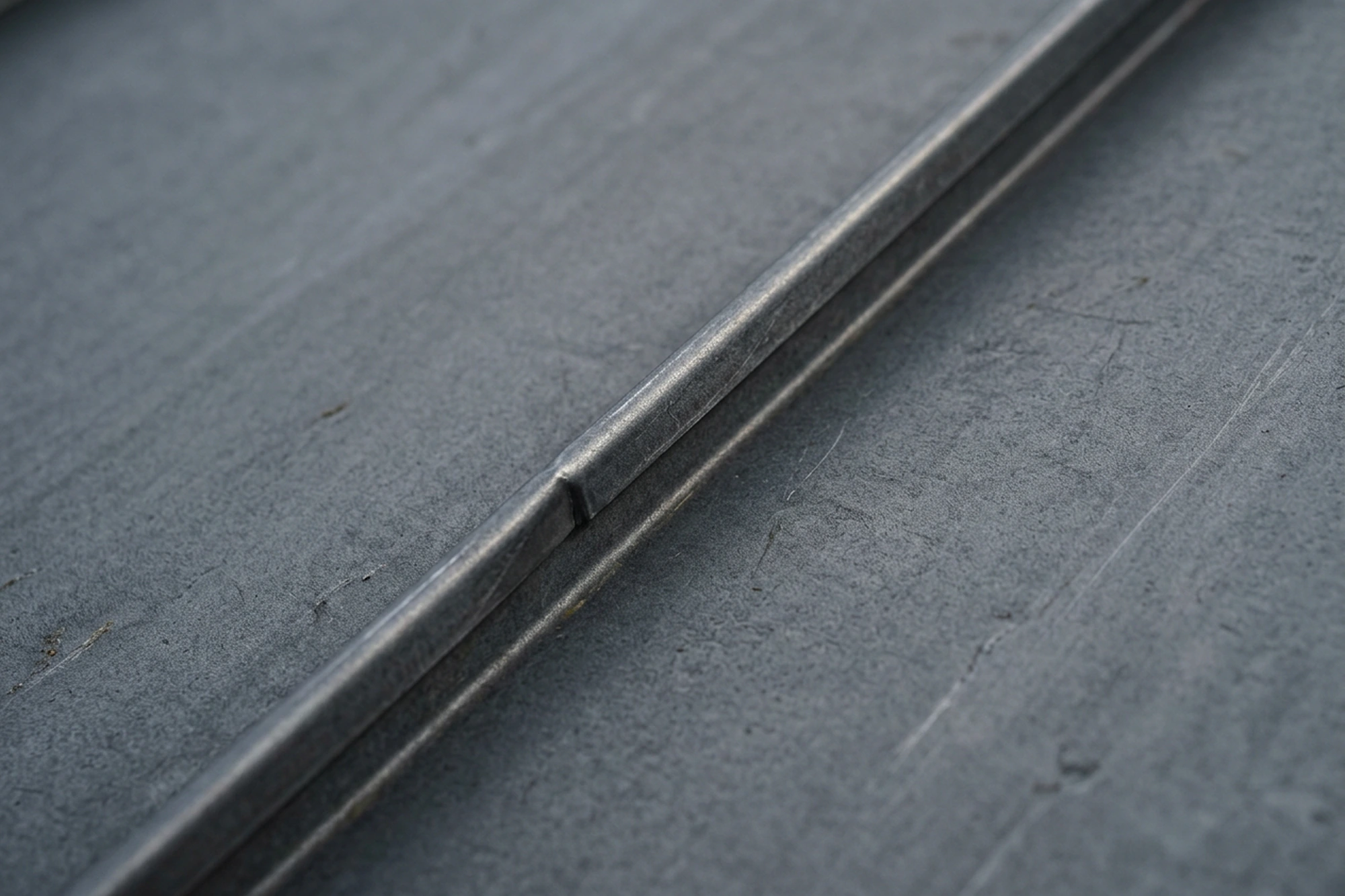
Standing seam is the roof most people picture when someone says “metal roof.” Long, continuous vertical panels run from ridge to eave, joined by raised seams that lock together above the water line.
Why The Seam Placement Matters?
Water and melt run straight down the flat part of the panel and never have to cross a seam, which is part of why standing seam sheds snow and resists ice damming so well. There’s no exposed fastener sitting in the path of running water either, since panels are typically secured with hidden clips.
Where It Fits Best:
- Steep and moderate residential rooflines where long-term performance matters more than upfront cost
- Modern architectural builds where clean vertical lines are part of the design
- Buildings in areas with heavy snow load, since panels shed weight fast
What It Asks Of The Installer?
Standing seam only performs the way it’s engineered to when the crew accounts for thermal expansion and contraction. Panels move slightly with temperature swings, and clip spacing has to allow for that movement. Get it wrong and a roof that should last decades can start buckling or working itself loose within a few winters.
Metal Shingles
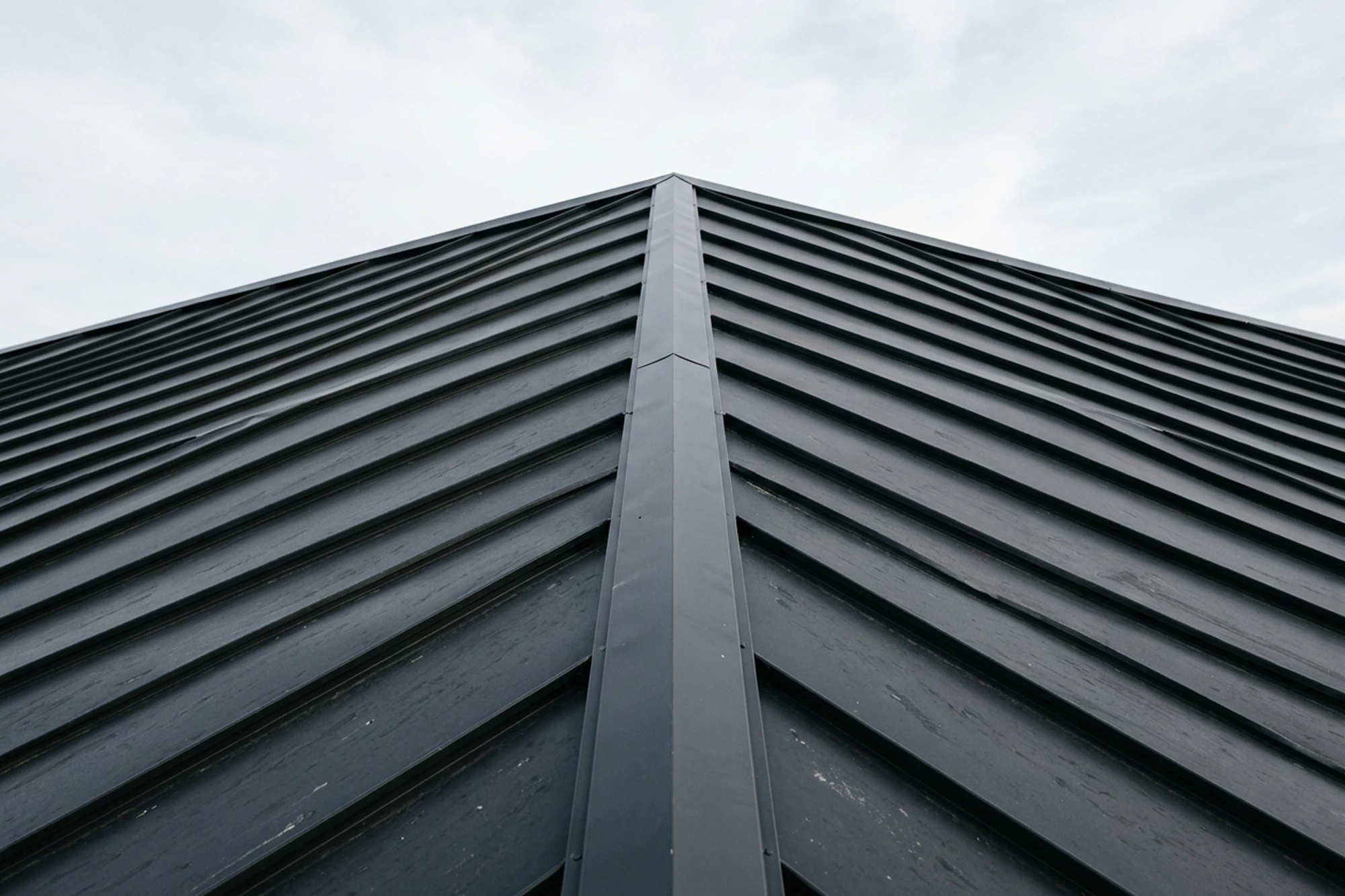
Metal shingles aren’t asphalt shingles swapped for a metal version. They’re a standalone product, engineered and installed as their own system, with their own underlayment and fastening approach.
The appeal. Metal shingles give a building the visual texture of a traditional shingled roof, sometimes styled to resemble slate, shake or standard asphalt, while carrying the durability and weight advantages of metal. For homeowners who want the metal roofing lifespan without the vertical-panel look, this is usually where the conversation lands.
A few things to know:
- Installation is closer in complexity to standing seam than to asphalt shingles, so it isn’t a faster or cheaper shortcut
- The interlocking panel design still needs correct flashing at valleys and penetrations, or the water-shedding advantage is lost at the details
- Colour and finish coatings vary by manufacturer, and that affects how the roof ages over ten or twenty years
Corrugated Metal
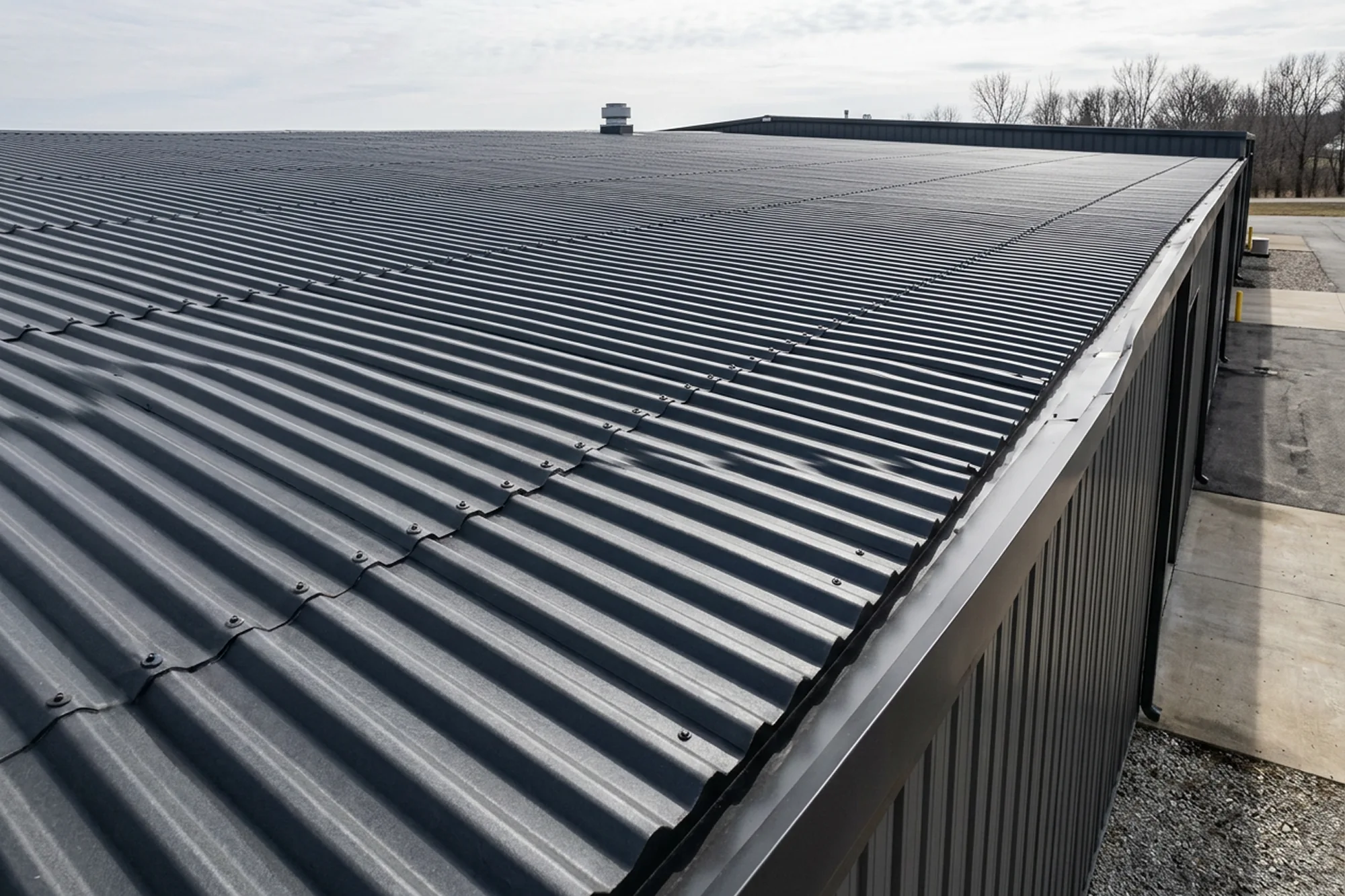
Corrugated panels are the simplest and generally most affordable metal roofing option. Ribbed panels run in a repeating wave pattern, exposed fasteners hold them down, and the look reads more industrial or agricultural than residential.
Where we install it most: garages, sheds, workshops and some contemporary residential builds where an exposed, utilitarian look is the point rather than something to hide.
The trade-off. Exposed fasteners mean more potential points of water entry over time compared to the hidden-clip systems above, so fastener condition needs to be checked periodically. It’s a reliable, budget-conscious system for the right building, but it isn’t a direct substitute for standing seam or metal shingles on a primary home roof.
Comparing the Three at a Glance
| Standing Seam | Metal Shingles | Corrugated | |
| Best suited for | Residential & commercial | Residential | Outbuildings, garages, some residential |
| Look | Clean vertical lines | Traditional shingle texture | Industrial, ribbed pattern |
| Fasteners | Hidden clips | Concealed | Exposed |
| Relative cost | Higher | Higher | Lower |
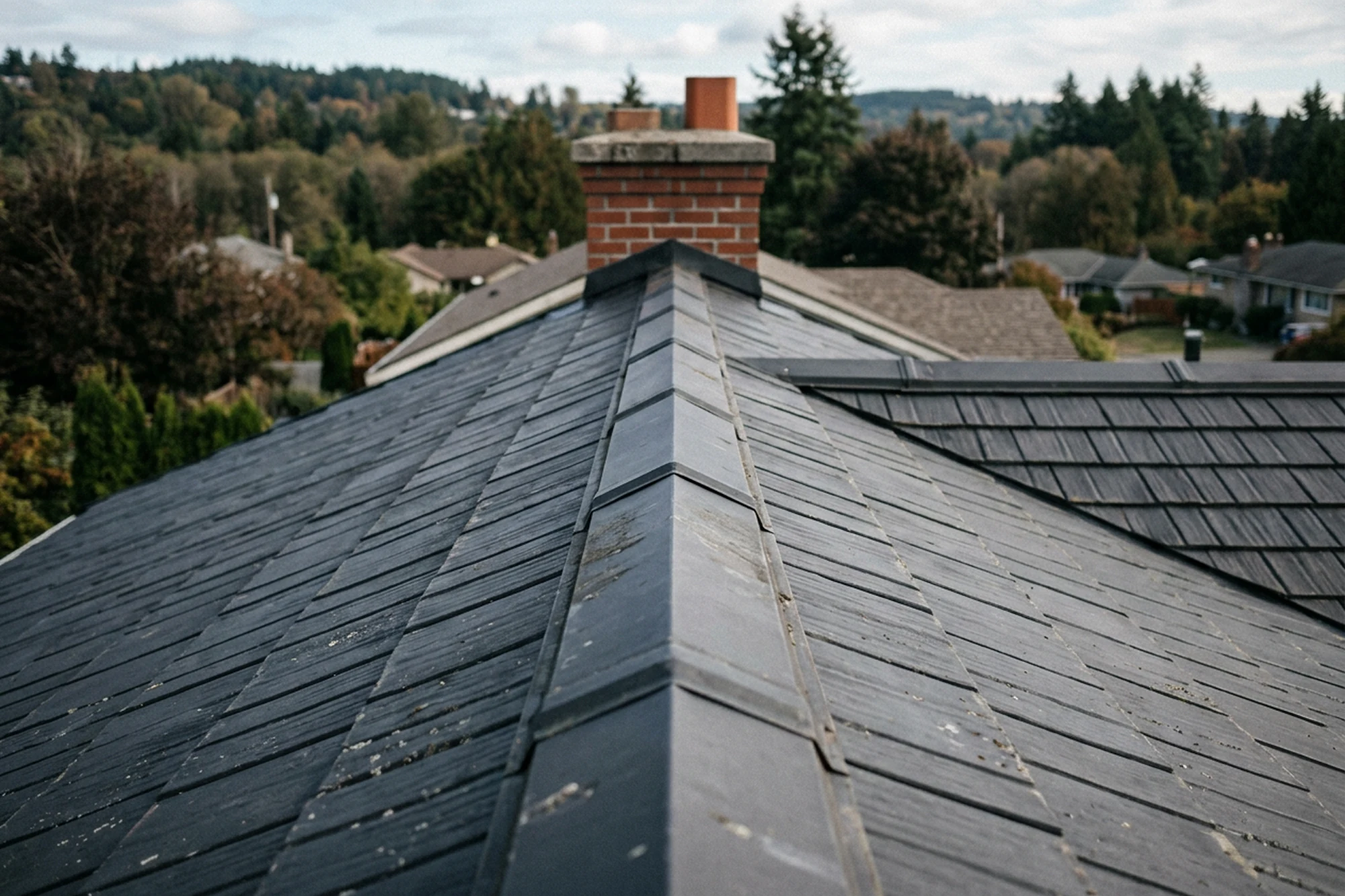
We use this table as a starting point with clients, not a final answer. The right pick still depends on your building’s slope, its exposure and what you’re trying to achieve visually.
Cost and Lifespan, Realistically
None of the three metal roofing types are the cheapest option on the market, that’s asphalt shingles, and we won’t pretend otherwise. What metal offers instead is a longer service life and less maintenance over that life, which changes the math depending on how long you plan to own the property.
Standing seam and metal shingles sit at the higher end of the metal roofing price range because of the labour and precision the install demands. Corrugated tends to run lower, partly because the panels are simpler to manufacture and partly because the installation itself is more straightforward. None of this replaces a real quote for your specific roof, since slope, square footage and accessibility all affect the final number, but it’s a fair starting expectation.
Signs a Metal Roof Wasn’t Installed Right
Not every metal roofing problem comes from the material. A lot of it comes from an install that skipped a detail. A few things we check when we’re called out to look at an existing metal roof:
- Panels that hum, rattle or shift audibly in wind, often a sign of incorrect clip spacing
- Rust starting at fastener points on a corrugated roof, usually from a worn or missing sealant washer
- Streaking or staining at seams on a standing seam roof, which can point to a flashing issue upstream
- Panels that look wavy or “oil-canned” along flat sections, a cosmetic sign of movement the install didn’t account for
None of these mean the roof is failing outright. But they’re worth a look before a small install issue turns into a bigger repair.
How We Help Clients Choose
We don’t start with a product. We start with the building: the slope, the current roof condition, the climate exposure and the budget. From there, the decision usually narrows fast. A steep residential roof in an exposed, snow-heavy area often points toward standing seam. A homeowner who wants metal’s lifespan without giving up a traditional look usually leans toward metal shingles. A garage, workshop or budget-driven project often makes the most sense in corrugated.
There isn’t a single “best” metal roofing type. There’s a best type for your specific roof, and that’s the conversation we have with every client before recommending one.
A Quick Word on Maintenance
All three metal roofing types last longer with a bit of attention. Standing seam and metal shingle systems benefit from a periodic check of clips, seams and flashing points, especially around chimneys and skylights. Corrugated roofs need their exposed fasteners checked for looseness or corrosion every few years. None of this is dramatic work, but skipping it is how small issues turn into full section repairs.
Get the Right Metal Roof for Your Property
Jerry’s Roofing and Renovation has worked across standing seam, metal shingles and corrugated systems for homes and businesses throughout Toronto and the GTA for over two decades as a family-owned, full-service roofing contractor. If you’re not sure which type fits your building, the next step is a look at the actual roof, not another spec sheet.
Reach out to Jerry’s Roofing and Renovation to talk through what’s right for your property.