



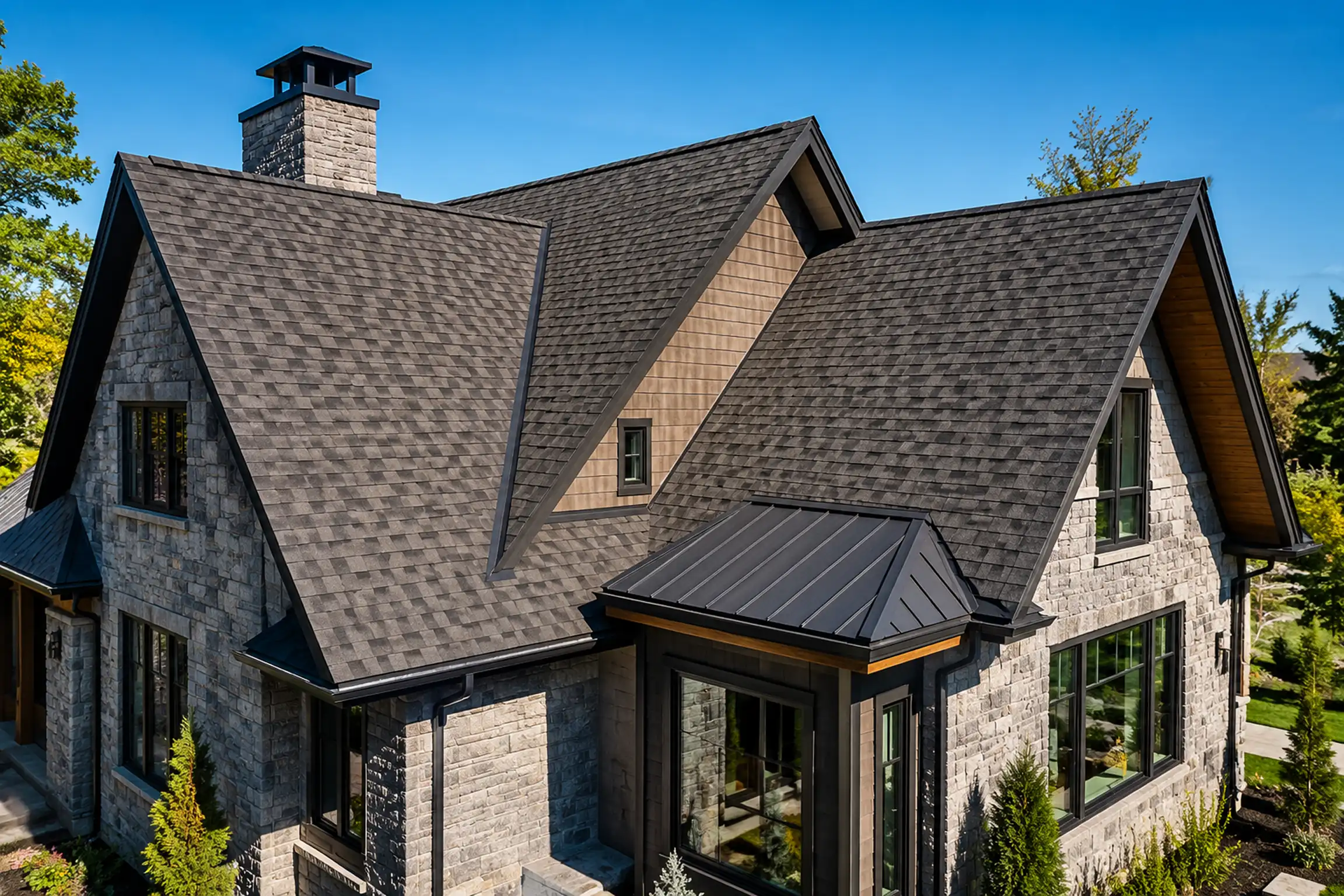
Standing on a ladder staring at your roof, the choice rarely feels obvious. Flat, metal, steep slope – each term gets thrown around online like the answer is universal, and it isn’t. At Jerry’s Roofing and Renovation, we’ve spent over two decades working across all three systems in Toronto and the GTA, and the right one always comes down to your building’s shape, your budget, and what a Toronto winter actually does to a roof over twenty years, not two.
This guide walks through the three main roofing categories we install and repair most across the Greater Toronto Area, and how we help clients think through which one fits their building.
Why Roof Type Even Matters in the GTA
Southern Ontario throws a bit of everything at a roof: heavy wet snow in January, ice damming during thaw-freeze cycles, and humid, sticky summers that stress membranes and shingles differently. A system that performs well in Arizona can fail here in a decade. So the climate, not just the look of the building, is what we start from on every job.
That’s the lens we bring to every roof we look at.
Think of it a bit like choosing footwear for the season. A dress shoe looks great on a dry sidewalk and falls apart the moment you hit slush. Roofing works the same way – the material that photographs well isn’t automatically the one built for our freeze-thaw cycles. We put function first, then form.
Flat & Low-Slope Roofing
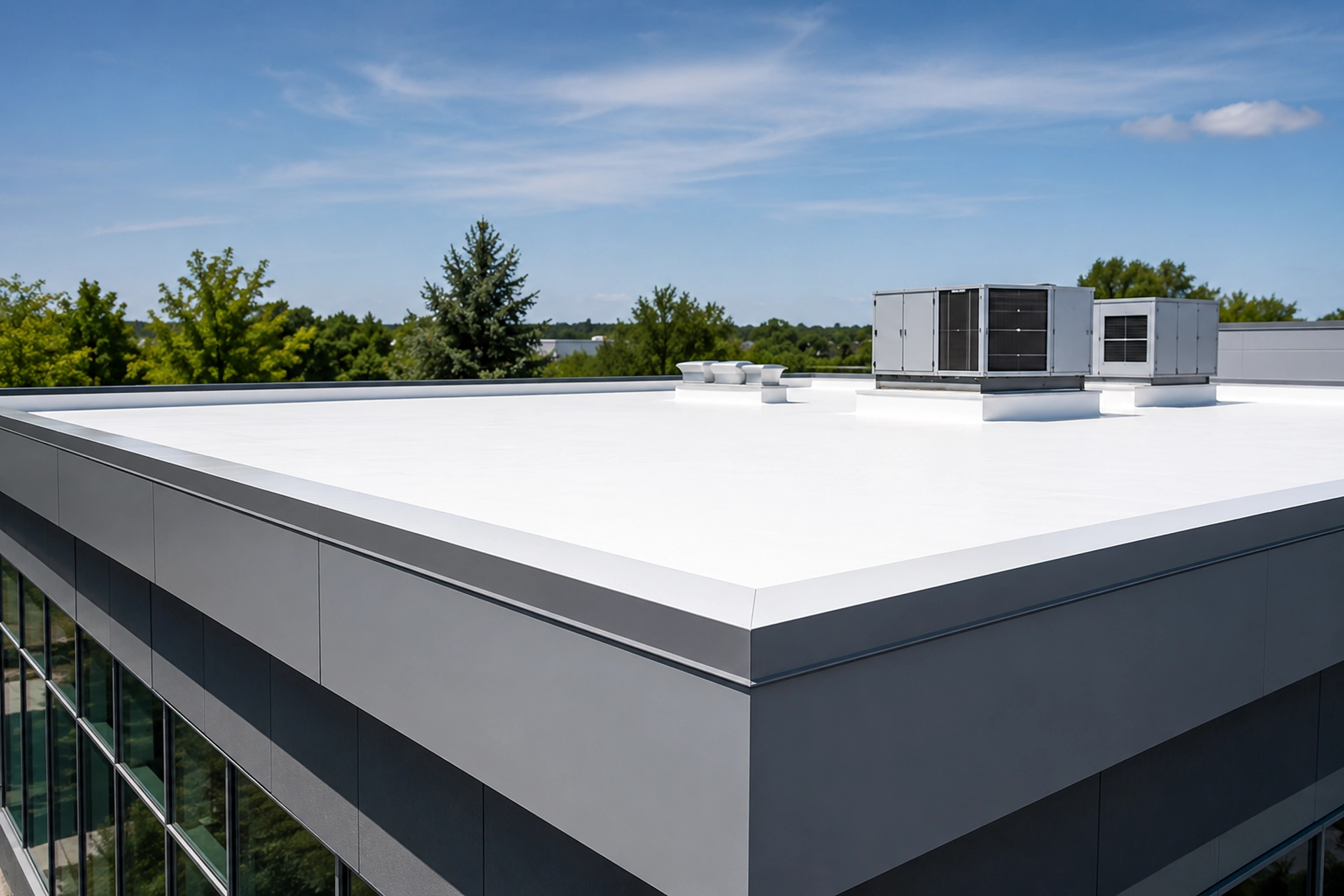
Flat roofs aren’t perfectly flat – most have a slight pitch (usually under 10 degrees) built in for drainage. We see this system most often on:
- Commercial buildings, warehouses and retail plazas
- Additions, garages and porch roofs on homes
- Multi-unit residential buildings
What holds it together. Modern flat roofs use membrane systems (TPO, EPDM, or modified bitumen) layered over insulation and a structural deck. Done right, the membrane sheds water toward drains or scuppers before it has a chance to pool.
Where flat roofs earn their keep: they maximize usable interior space (no wasted attic volume), they’re cheaper per square foot to install on large commercial footprints, and they make room for rooftop equipment – HVAC units, solar arrays, that sort of thing.
Where they need attention: drainage is everything. A flat roof with a clogged drain or a low spot will hold water, and standing water is the single biggest cause of premature membrane failure. We tell clients that regular inspection matters more here than on a sloped roof, especially after heavy snowfall.
It’s worth saying plainly: a flat roof isn’t a lesser version of a sloped one. It’s a different engineering problem with its own solved answers, and we approach it that way. Judging it by sloped-roof standards is where a lot of confusion starts.
Metal Roofing
Metal roofing has shifted from an industrial-only material to a genuine residential option over the past decade, and it’s a category we’ve watched grow steadily across our GTA client base.
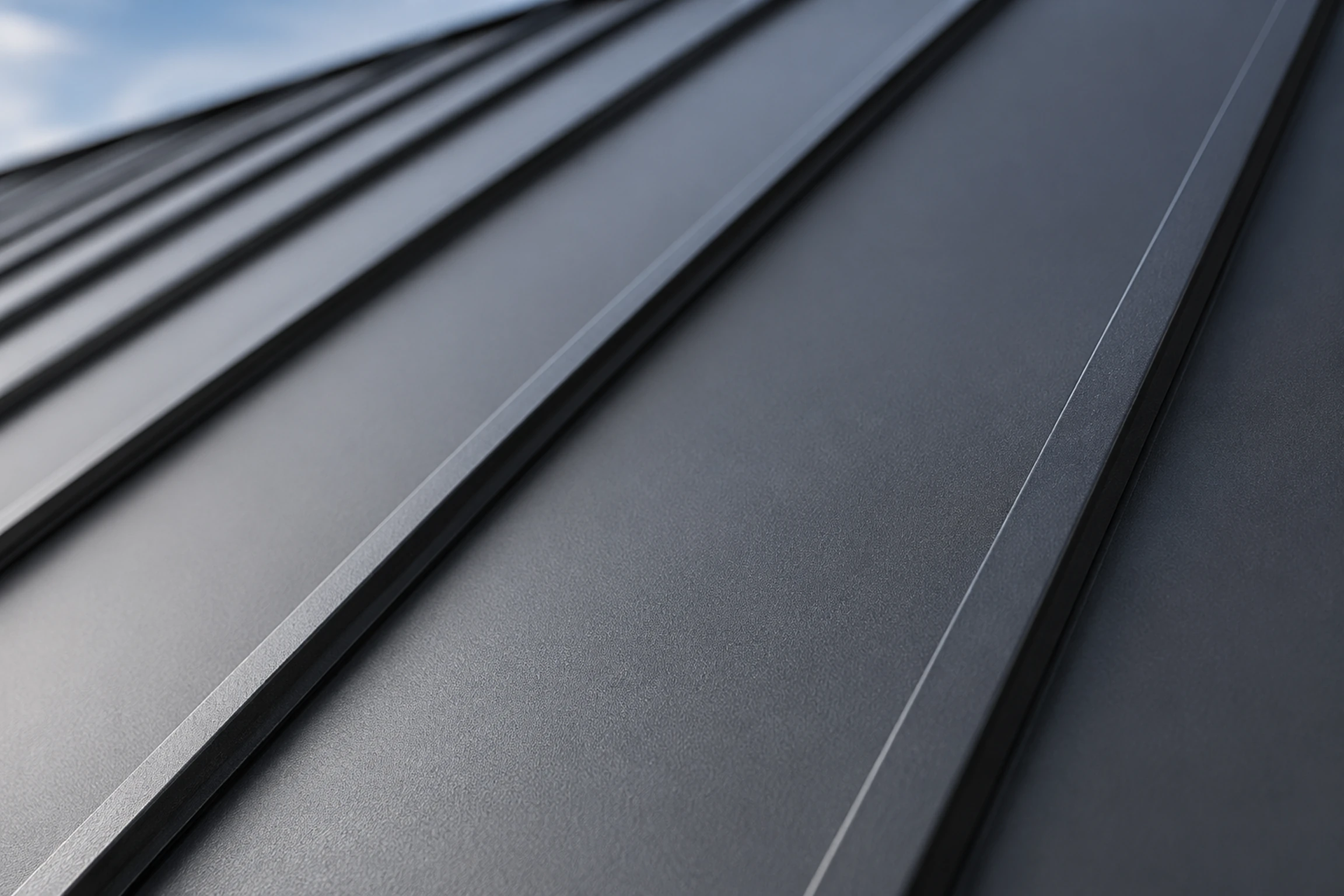
Standing Seam Panels
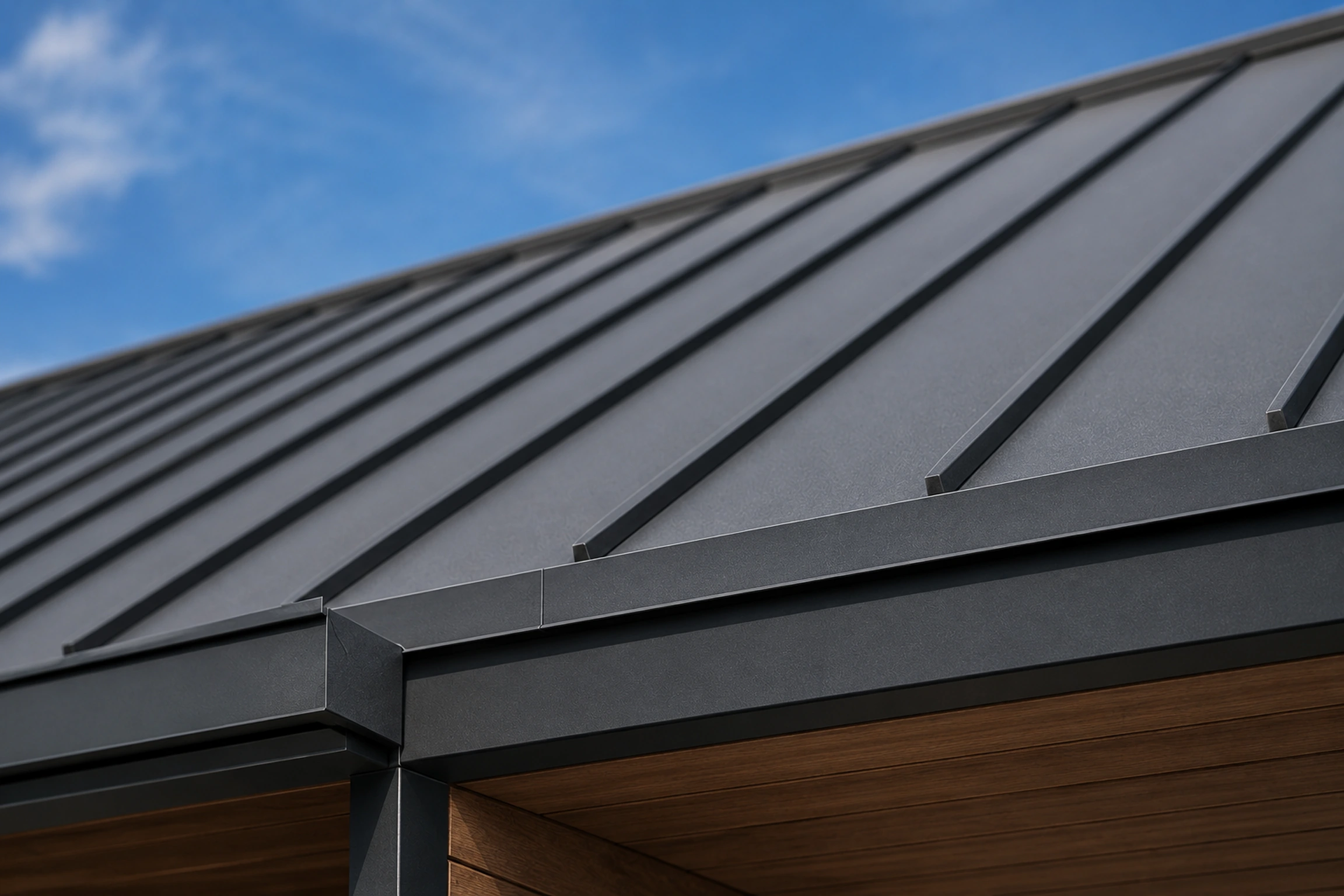
Long, continuous vertical panels with raised interlocking seams. The seams sit above the water line, which is part of why this style handles heavy snow and ice so well – water and melt run straight down the panel instead of pooling at a joint.
Metal Shingles
A standalone product, engineered and installed as its own system rather than a stand-in for asphalt or slate. It offers the visual texture of a shingled roof with the durability profile of metal, and we install it with its own fastening and underlayment approach.
Corrugated Metal
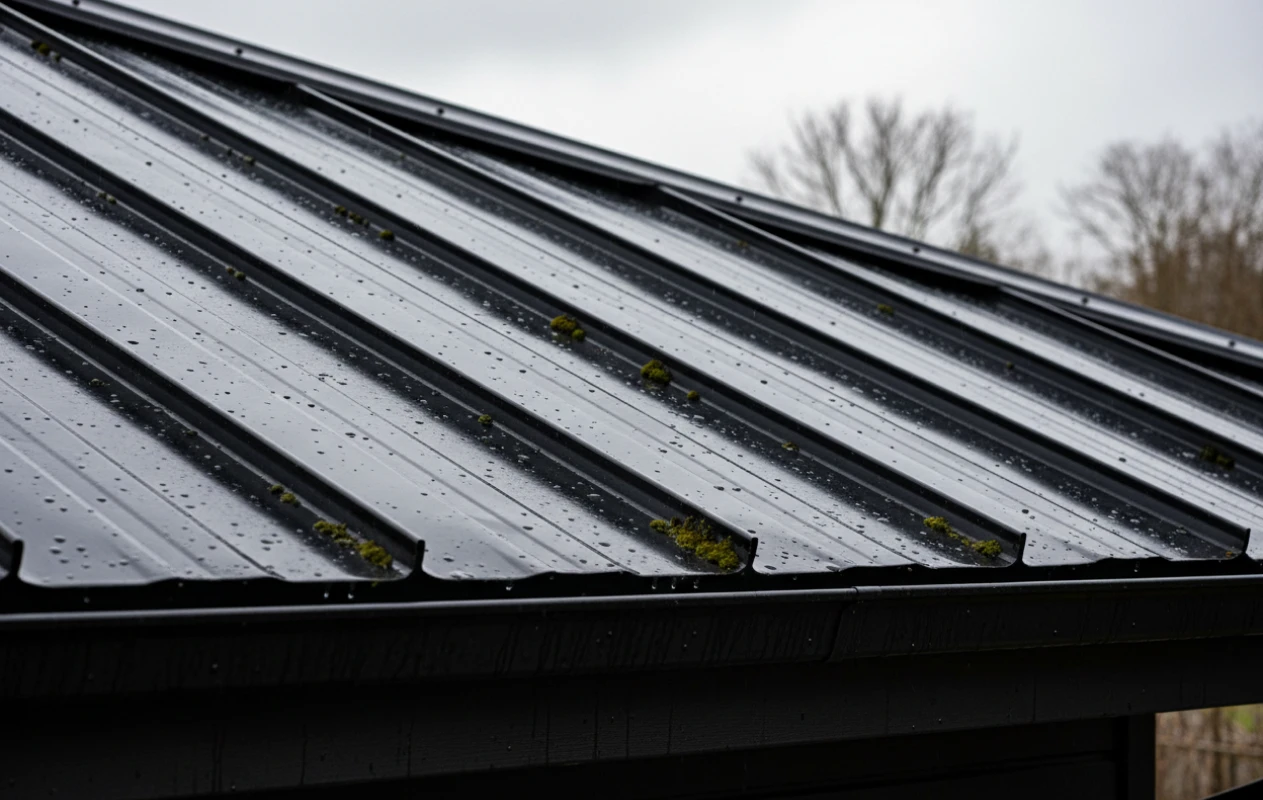
Ribbed panels, often used on outbuildings, garages and some contemporary residential designs where a more industrial look is wanted. Simpler profile, generally lower cost than standing seam.
Snow tends to slide off a metal roof rather than sit and melt-refreeze, which cuts down on ice damming along the eaves – a real problem on GTA homes with poor attic ventilation. Metal roofs also tend to outlast asphalt shingles by a wide margin, and they hold up to wind uplift better than most other materials.
The trade-off: upfront cost is higher than asphalt shingles, and installation requires a crew that actually knows metal – panel expansion and contraction, fastener spacing and flashing details all need to be handled correctly, or the system underperforms its own design. This is where our crews spend the most time getting the details right.
That last part matters more than most marketing pages admit. Metal roofing only performs the way it’s supposed to when the install accounts for thermal movement. Skip that step and a beautiful standing seam roof can start humming, buckling, or leaking within a few winters. It’s a system, not just a material.
Steep Slope Roofing
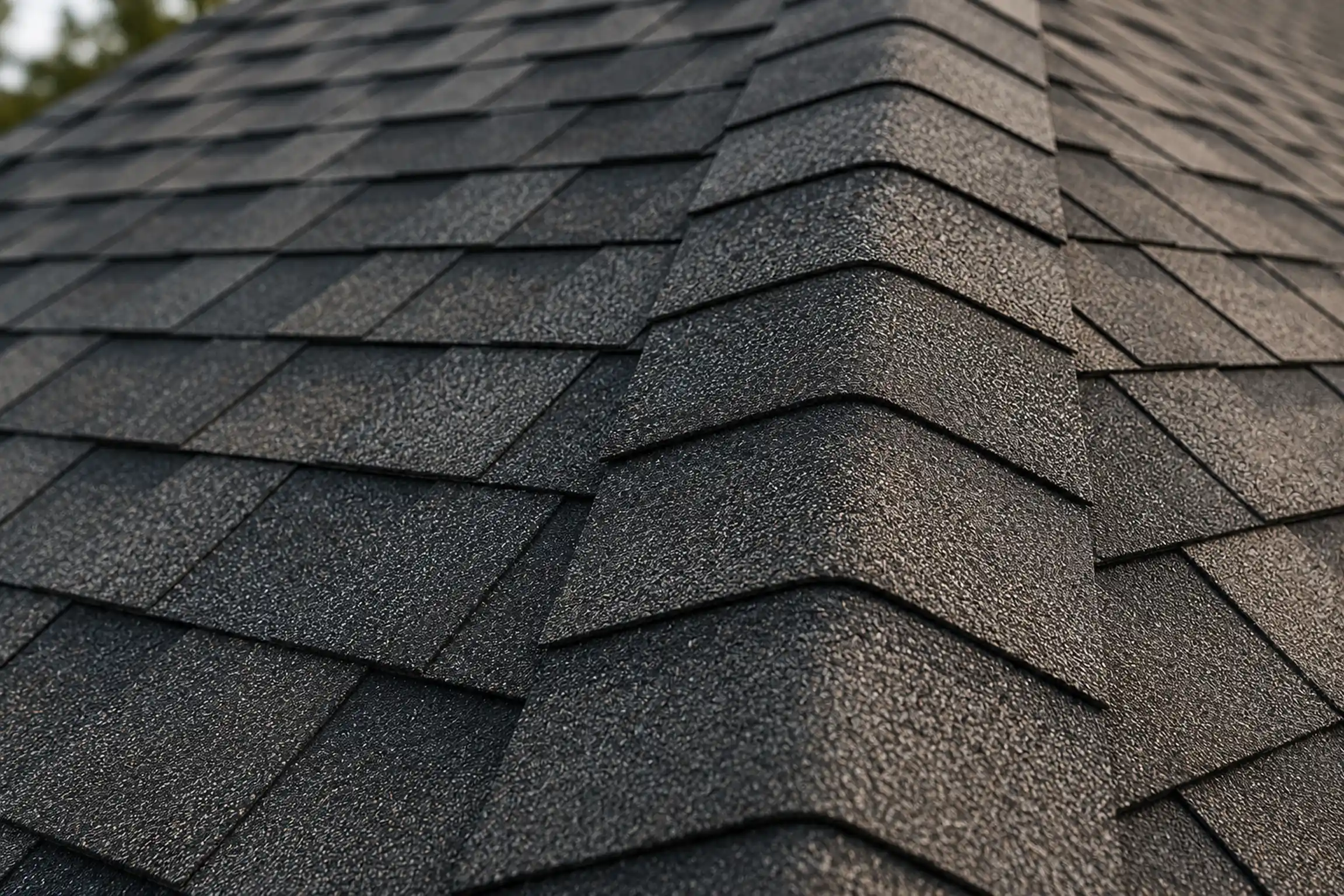
This is the roof most people picture when they hear the word “roof” – a pitched roofline, typically 20 degrees or steeper, common across GTA single-family homes from Etobicoke to Whitby, and the system we install and repair most often on residential properties.
Steep slope systems rely on gravity to shed water fast, which is part of why they pair well with asphalt shingles, but the category also includes wood shake, slate, and – as covered above – metal panel or shingle systems installed on a pitched deck.
A few things we check on every steep slope roof in this region:
- Ventilation and insulation work together to prevent ice damming – a poorly vented attic is often the real cause of ice buildup, not the roofing material itself.
- Flashing at valleys, chimneys and skylights is where the majority of leaks start, so the quality of that detail work matters more than the shingle brand.
- Slope pitch affects material choice – very steep pitches shed water and debris fast but can complicate walkability during install and future maintenance.
Comparing the Three at a Glance
| Flat & Low-Slope | Metal | Steep Slope | |
|---|---|---|---|
| Typical use | Commercial, additions | Residential & commercial | Residential |
| Snow/ice handling | Needs active drainage | Sheds snow, resists ice damming | Depends on ventilation |
| Lifespan expectation | Moderate, membrane-dependent | Long | Moderate to long, material-dependent |
| Upfront cost | Lower per sq ft (commercial) | Higher | Mid-range |
We use this as a starting point with clients, not a final answer – the specifics of your building, its age and its current condition will shift the picture.
Signs Your Current Roof Is Telling You Something
Before comparing systems, it helps to know whether your existing roof is actually due for a change. A few flags we ask clients to check, regardless of which category they’re in:
- Granules collecting in gutters or at the base of downspouts (a sign shingles are wearing thin)
- Sagging deck sections, visible from the attic or from the ground looking up along the roofline
- Water stains on interior ceilings, even faint ones, after a heavy rain or snowmelt
- Daylight visible through the roof deck from inside the attic
- Membrane blistering, cracking or pooled water that doesn’t drain within 48 hours on a flat roof
None of these guarantee a full replacement is needed. Sometimes it’s a repair. But ignoring them tends to turn a small job into a much bigger one by the following winter.
How to Actually Choose
Here’s a decision rule rather than a summary: if your roof is flat or nearly flat, you’re choosing within the low-slope category regardless of preference – the physics decides for you. If it’s pitched, the real choice is between asphalt, metal, or another sloped material, and that’s where snow load, budget and how long you plan to own the property should drive the call. We walk clients through exactly this trade-off during every estimate.
A roof that’s twelve years into a twenty-five-year lifespan doesn’t need the same decision as one that’s failing at year eight. Age and current condition change the math every time.
A Quick Word on Maintenance
Whichever system ends up on your roof, maintenance is what actually determines whether it hits the upper or lower end of its lifespan. Flat roofs need drains cleared before every winter. Metal roofs need fastener and seam checks every few years, since a loose fastener is a slow leak waiting to happen. Steep slope roofs need flashing and valley inspections, particularly around chimneys and skylights, where most leaks originate.
Skipping this isn’t dramatic on its own. It’s cumulative – small neglect compounding over several winters until a minor fix turns into a full section replacement.
What We Won’t Do
We won’t tell you a roof type is “the best” without knowing your building. A flat commercial roof and a steep residential roof aren’t competing for the same job, and pretending otherwise is how homeowners end up with the wrong system and a bigger bill down the line. That’s not how we work, and it’s not how we’ve stayed in business for over twenty years.
Get an Assessment That Fits Your Roof
Jerry’s Roofing and Renovation has served Toronto and the Greater Toronto Area for over two decades as a family-owned, full-service roofing contractor, working across flat and low-slope, metal, and steep slope systems. If you’re weighing your options, the next step is a look at the actual roof, not another article.
Reach out to Jerry’s Roofing and Renovation to talk through what’s on your building right now.