



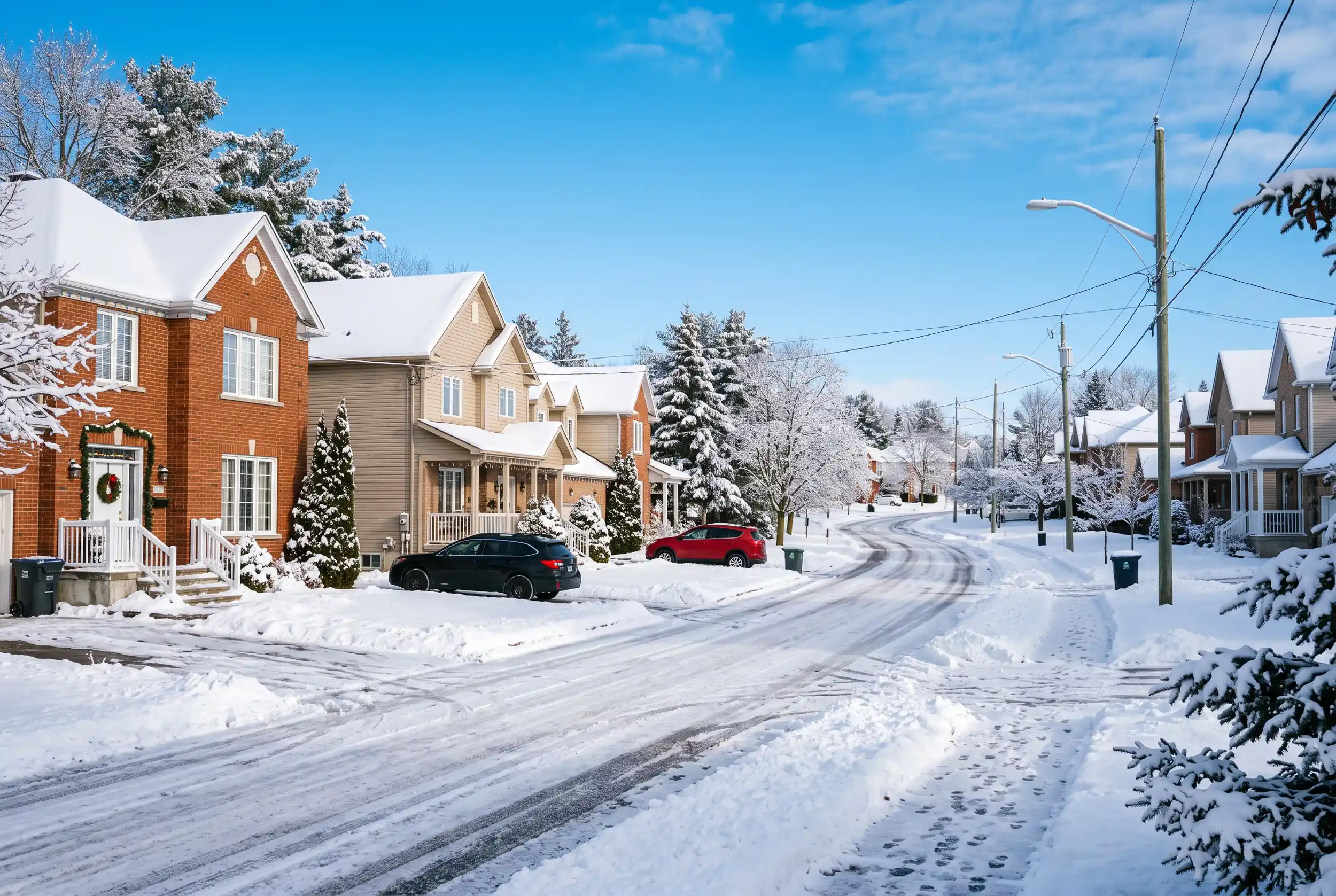
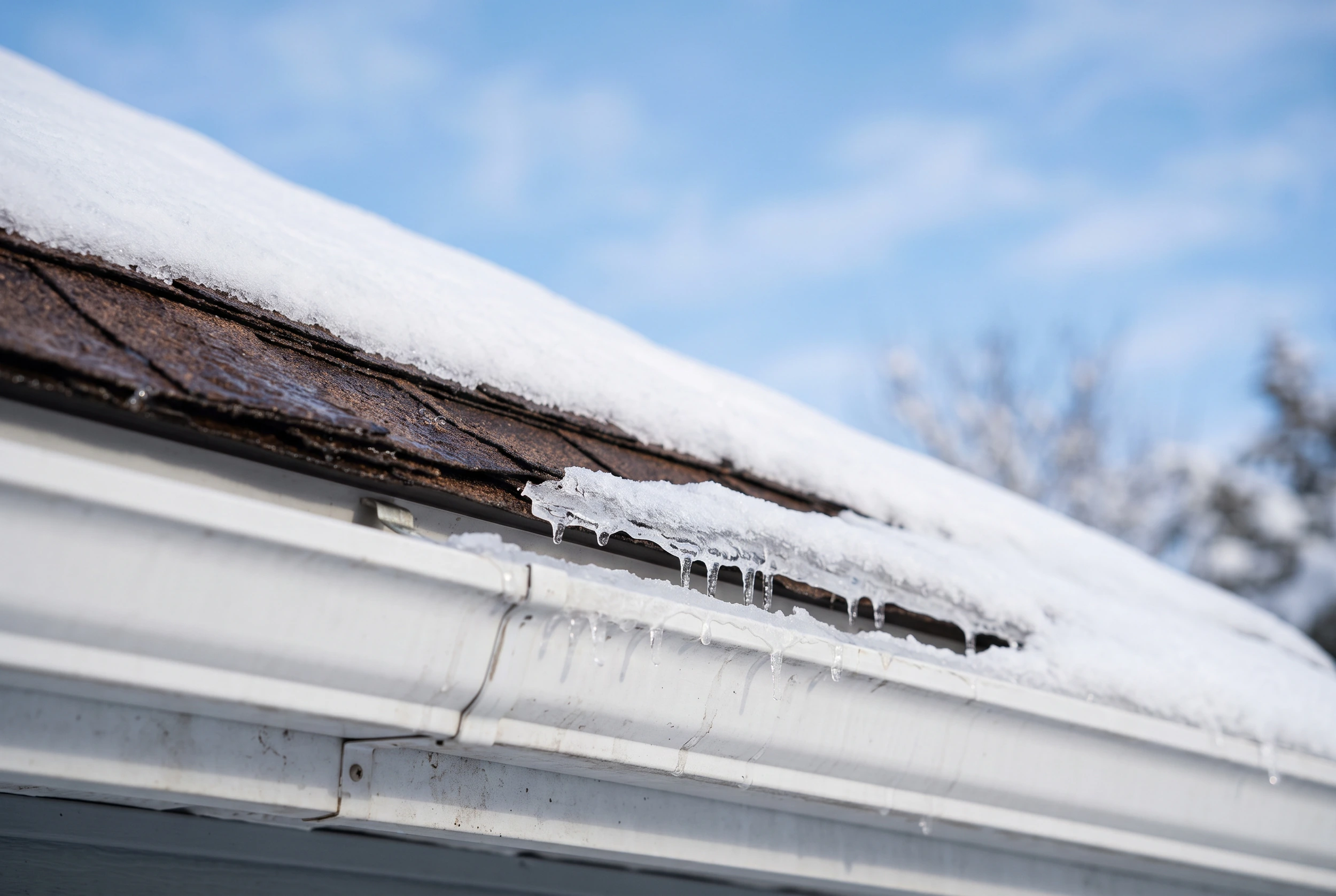
Ice dams form when heat escaping from your attic melts the snow on your roof and the meltwater refreezes at the cold eaves. The ice builds into a ridge that traps more water behind it, and that water backs up under your shingles and into your home. In Toronto, where winter temperatures bounce above and below freezing for months, the best prevention is a roof built to stay evenly cold: sealed, insulated and ventilated properly. At Jerry’s Roofing and Renovation, we’ve brought over two decades of family-run roofing experience to homes across the GTA, and most ice dam calls we see trace back to design, not to the shingles.
Why Does Ice Damming Happen on Toronto Roofs?
Ice damming happens when one part of your roof is warm enough to melt snow while the part right next to it stays below freezing. Three things have to line up:
- Snow is sitting on the roof
- Heat is leaking up into the attic and warming the roof deck
- The eaves are cold because they hang past the heated part of the house
Toronto gives you all three most winters. Heavy snow arrives, furnaces run for months and the eaves stay cold, so the setup is almost always in place.
Heat Escaping From the Attic
Warm air from the living space rises through gaps around light fixtures, attic hatches, plumbing stacks and chimney chases. It heats the underside of the roof deck, and the snow above starts to melt even when it’s well below zero outside. Thin or uneven insulation makes this worse.
Freeze-Thaw Swings
A sunny afternoon at 2 degrees followed by an overnight drop to minus 10 is ordinary for the GTA. Meltwater runs down the roof during the day, reaches the unheated eave and freezes solid at night. Repeat that for a few days and a small lip of ice turns into a dam.
What Damage Can an Ice Dam Cause?
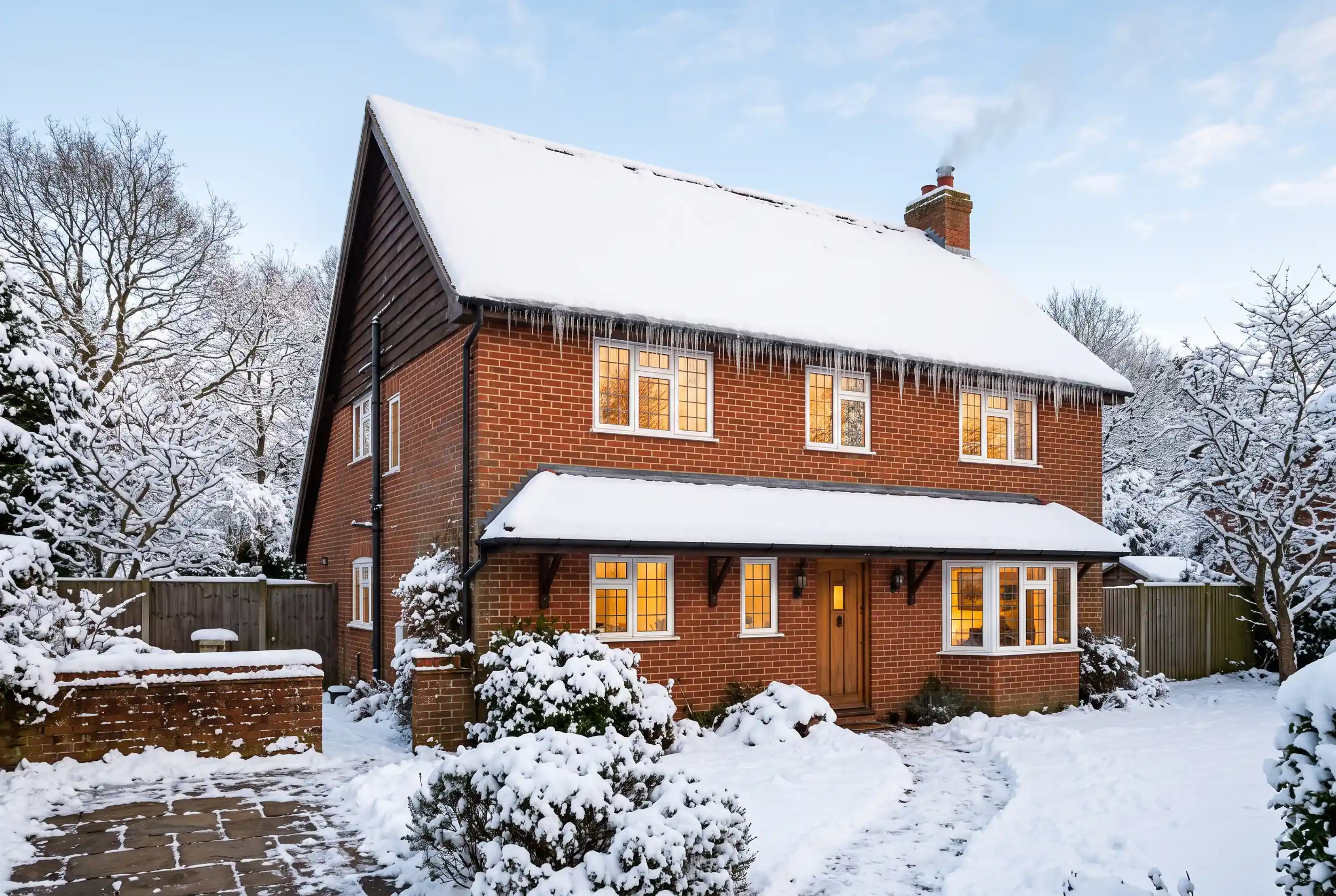
The first sentence of the answer is simple: water gets where it was never meant to go. Shingles and underlayment are designed to shed water downhill, not to hold back a pool of it. Once water sits behind a dam, it finds its way through nail holes and overlaps.
Common results include:
- Wet or compressed attic insulation that no longer works properly
- Stained or sagging ceilings and wet walls below the eaves
- Mould growth in the attic or inside wall cavities
- Peeling paint and warped trim around windows
- Rotted fascia, soffits and roof decking over time
- Torn or bent gutters from the weight of ice
Some of this damage stays hidden for a whole season. That’s why a small stain on a ceiling in March is worth taking seriously.
How Does Roofing Design Prevent Ice Dams?
Good roof design prevents ice dams by keeping the roof deck the same cold temperature from ridge to eave, so snow melts slowly or not at all and any meltwater has a clear path off the roof. Four design elements do most of the work.
Insulation and Air Sealing
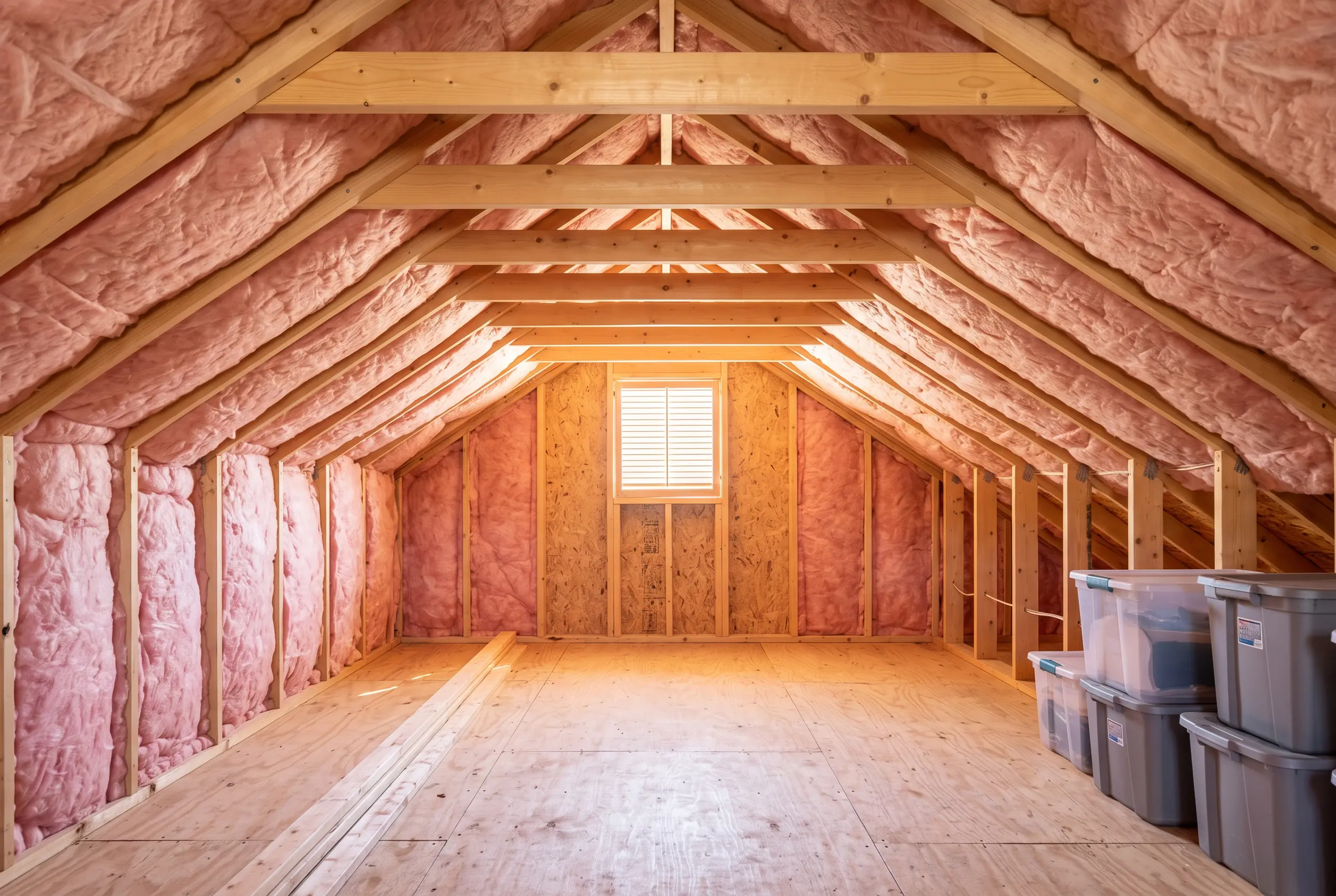
Insulation slows heat moving into the attic, but air sealing matters just as much. Sealing the gaps around attic hatches, wiring penetrations and vent stacks stops warm, moist air from reaching the roof deck. We often tell homeowners that sealing the ceiling is the first job, and adding insulation on top is the second.
Balanced Ventilation
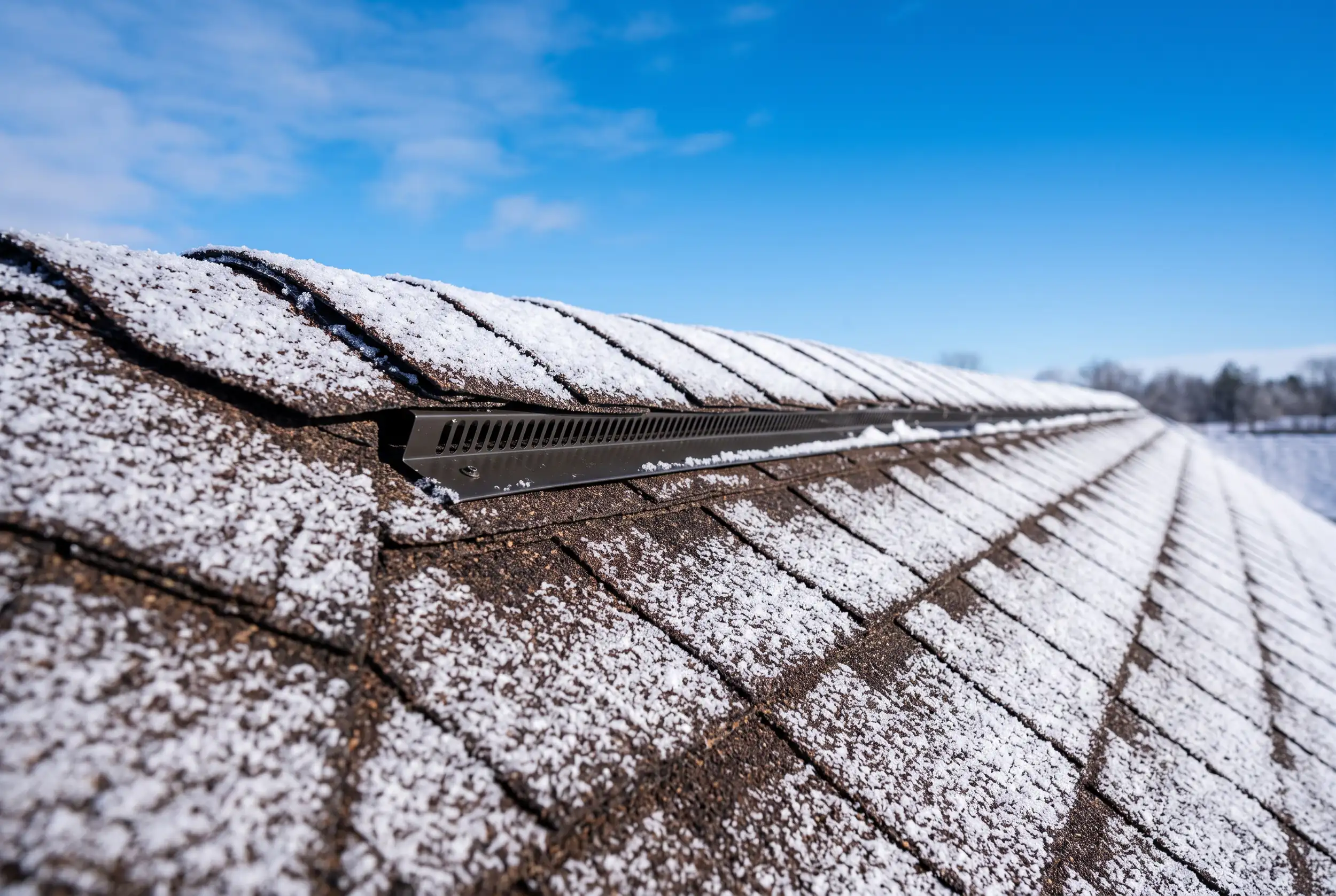
A cold roof needs air moving under it. Soffit vents let cold air in at the eaves and ridge or roof vents let it out at the peak, so the deck stays near outdoor temperature. Intake and exhaust have to be in balance. Plenty of exhaust with blocked soffits, which is common when insulation gets pushed into the eaves, does very little.
Eave Protection
Even a well-designed roof can have a bad winter. A self-adhering waterproof membrane installed along the eaves and into valleys gives you a second line of defence if water does back up under the shingles. It doesn’t cure the cause, but it limits what a dam can do while you fix the cause.
Roof Style and Details
Different roof types handle snow and meltwater in their own way:
- Steep slope roofs shed water fast, so most ice dam problems here come from attic heat loss and poor ventilation rather than the shingles themselves
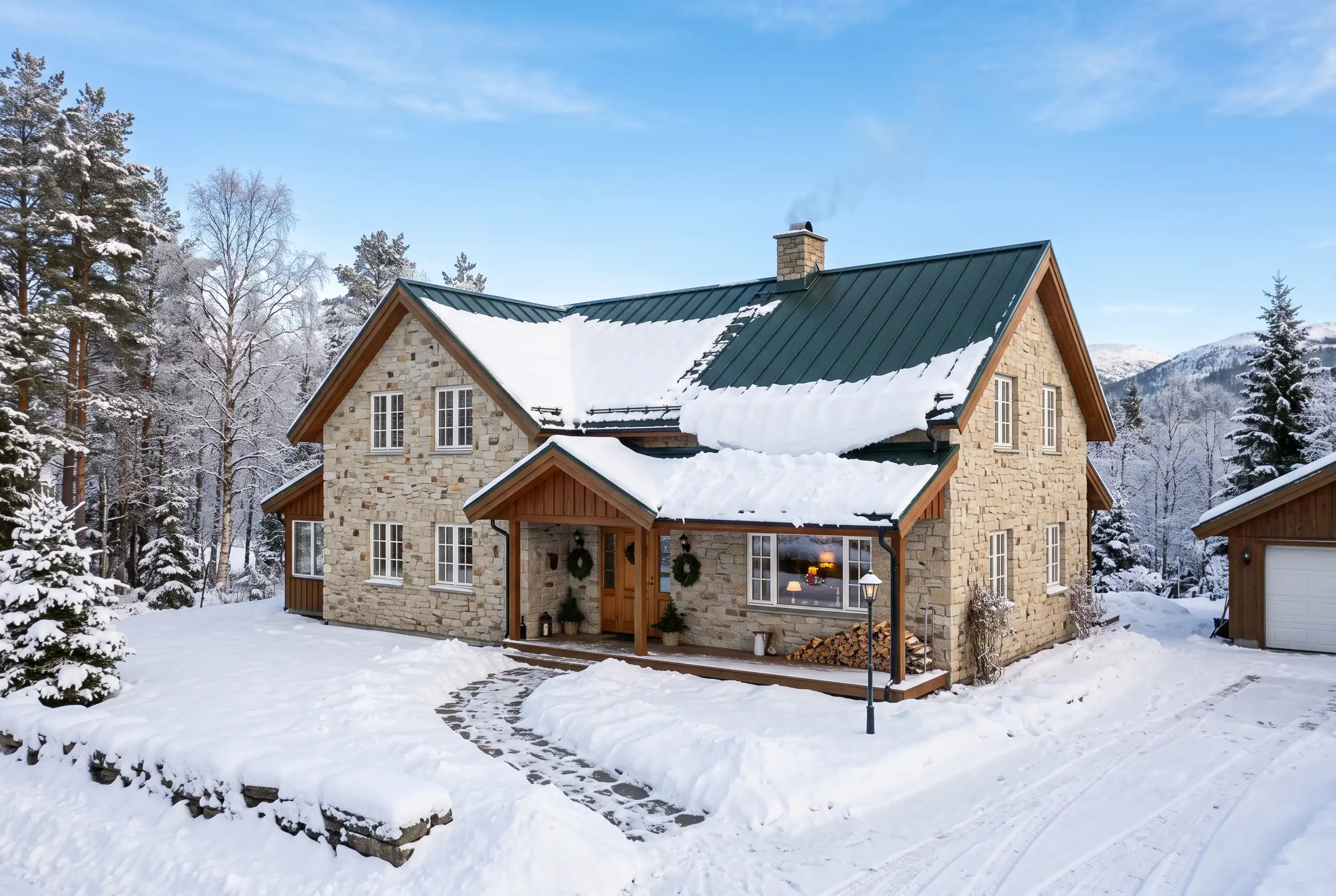
- Metal roofs have smooth panels that let snow slide off before it melts and refreezes, which reduces buildup along the eaves when the system is installed correctly
- Complex rooflines with valleys, dormers and low-slope sections collect snow and slow drainage, so flashing and eave detail matter more
- Flat and low-slope roofs don’t form ice dams at the eaves the same way, but clogged drains and standing meltwater cause their own winter problems
Why Don’t Heat Cables and Roof Raking Solve It?
Heat cables and roof raking can help in the short term, but neither fixes the reason the dam formed. Cables melt channels through existing ice so water can drain, which is useful in a pinch. Raking the first few feet of snow off the roof reduces the supply of meltwater, and it’s best done from the ground with a proper roof rake.
Please don’t chip at ice with a hammer or shovel. It’s easy to crack shingles and hurt yourself, and the dam usually comes back. Treat these as stopgaps while you sort out insulation and ventilation.
What Can You Do Before the Next Snowfall?
If you’re thinking about ice dam prevention this fall, here’s a practical list:
- Look at your attic insulation for thin, compressed or uneven spots
- Check the attic hatch for gaps and add weatherstripping if you can see daylight or feel drafts
- Make sure soffit vents aren’t blocked by insulation
- Clear leaves and debris from gutters and downspouts
- Note where snow melts first on your roof in winter, since uneven melting points to heat loss below
- Keep a record of any ceiling stains so a roofer can match them to the roof layout
None of this needs special tools. It does give you a good picture of what’s actually going on before the first big storm.
When Should You Call a Roofer?
Call a roofer if you’ve had ice dams two winters in a row, if you see stains on ceilings or walls near the exterior, or if your roof is older and you’re not sure how the attic is ventilated. A repeat dam almost always means the design needs a look, not another round of ice removal.
We’d rather look at the actual roof and attic than guess. A short inspection can tell you whether you need better ventilation, more insulation, eave protection or a bigger repair, and that saves you paying for work you don’t need.
Get Your Roof Ready Before Winter Hits
Jerry’s Roofing and Renovation is a family-owned, full-service roofing contractor serving Toronto and the Greater Toronto Area. If you’ve had ice dams before or you’d like to make sure you don’t get them, we’re happy to take a look at your roof and talk through what makes sense for your home.
Reach out to Jerry’s Roofing and Renovation to book a roof check before the first snowfall.