



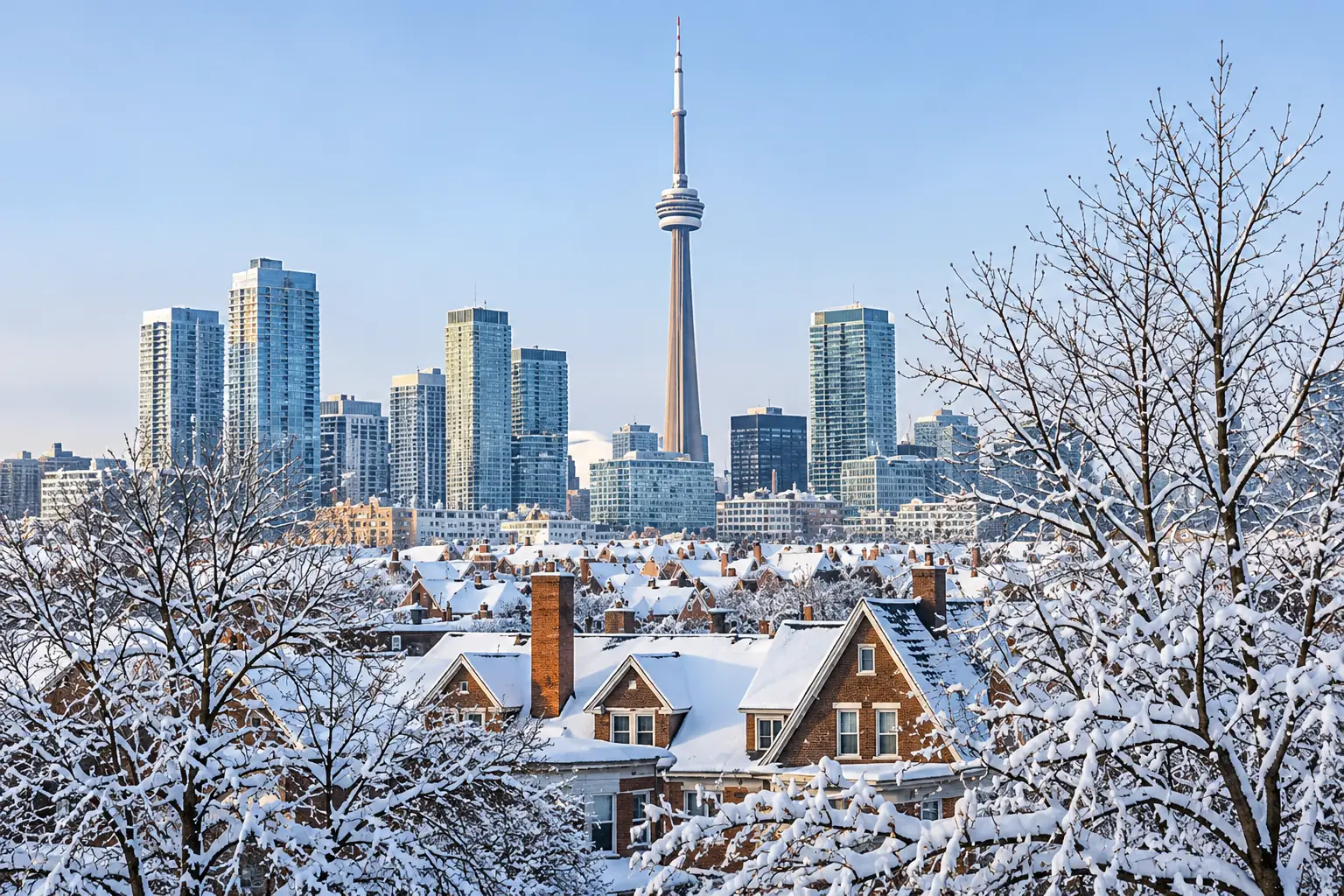
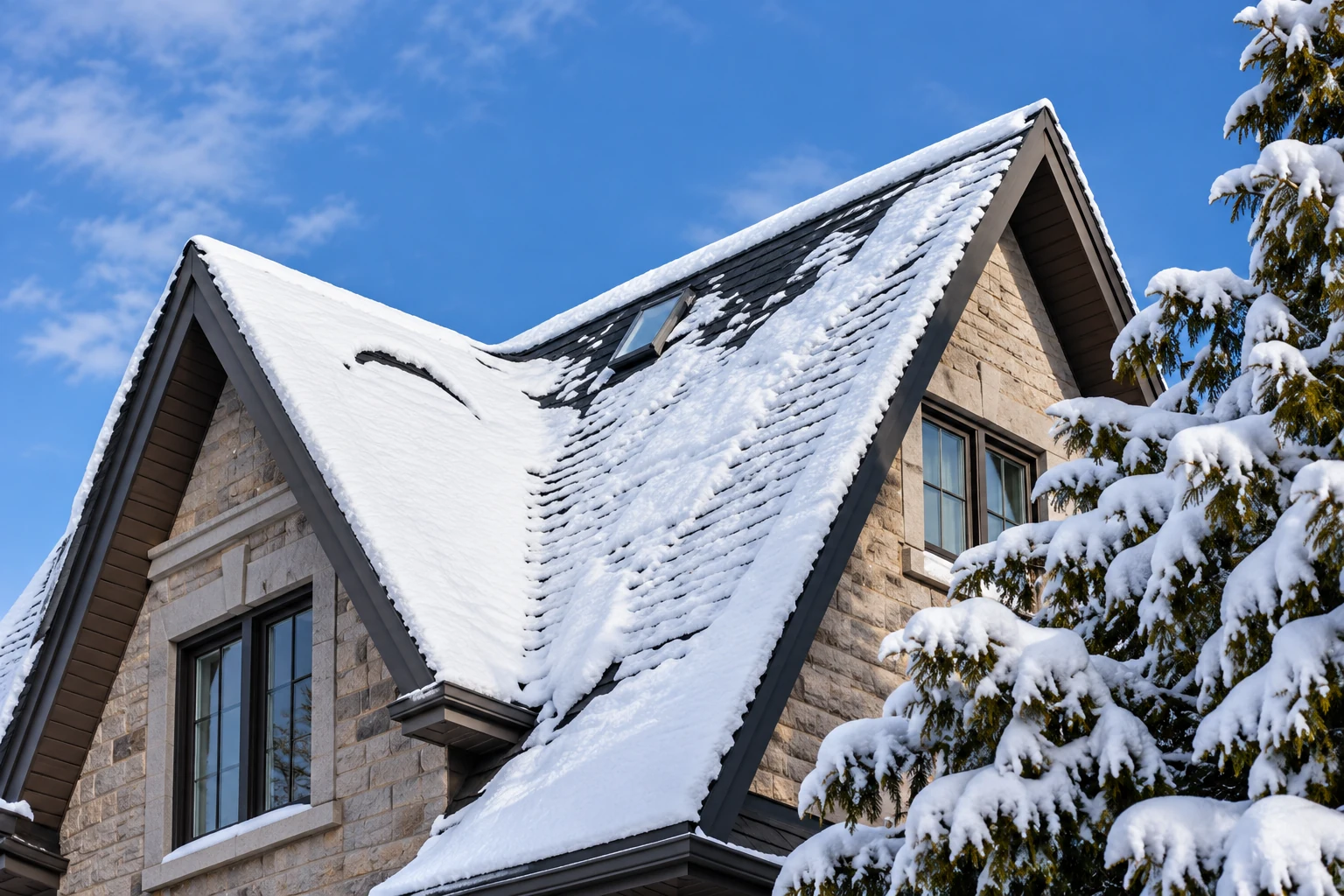
Steep slope roofs handle Toronto snow and ice mainly through gravity. The pitch moves meltwater off the roof fast and stops it from pooling, and on smoother materials it helps snow slide off before it gets too heavy. But pitch alone doesn’t protect a home. A pitched roof gets through winter dry when the underlayment, eave protection, flashing and attic ventilation all do their part. At Jerry’s Roofing and Renovation, we’ve spent over two decades as a family-run roofing business working on pitched roofs across Toronto and the GTA, and the winter problems we see almost always start at a detail, not at the slope.
What Counts as a Steep Slope Roof?
A steep slope roof is any pitched roof with a slope of about 4/12 or more. That means the roof rises at least 4 inches for every 12 inches it runs horizontally, which works out to roughly 18 to 20 degrees. Most single-family homes across the GTA fall into this category, from older bungalows in Scarborough to newer two-storey builds in Vaughan.
Common steep slope materials include:
- Asphalt shingles, the most common choice on GTA homes
- Metal roofing, either panels or metal shingles installed on a pitched deck
- Slate
- Cedar shake
Each one sheds water downhill but deals with sitting snow differently.
How Does Pitch Help a Roof in Winter?
Pitch helps in two ways. It moves water off the roof quickly, and it limits how much snow can build up before gravity takes over.
Faster Drainage
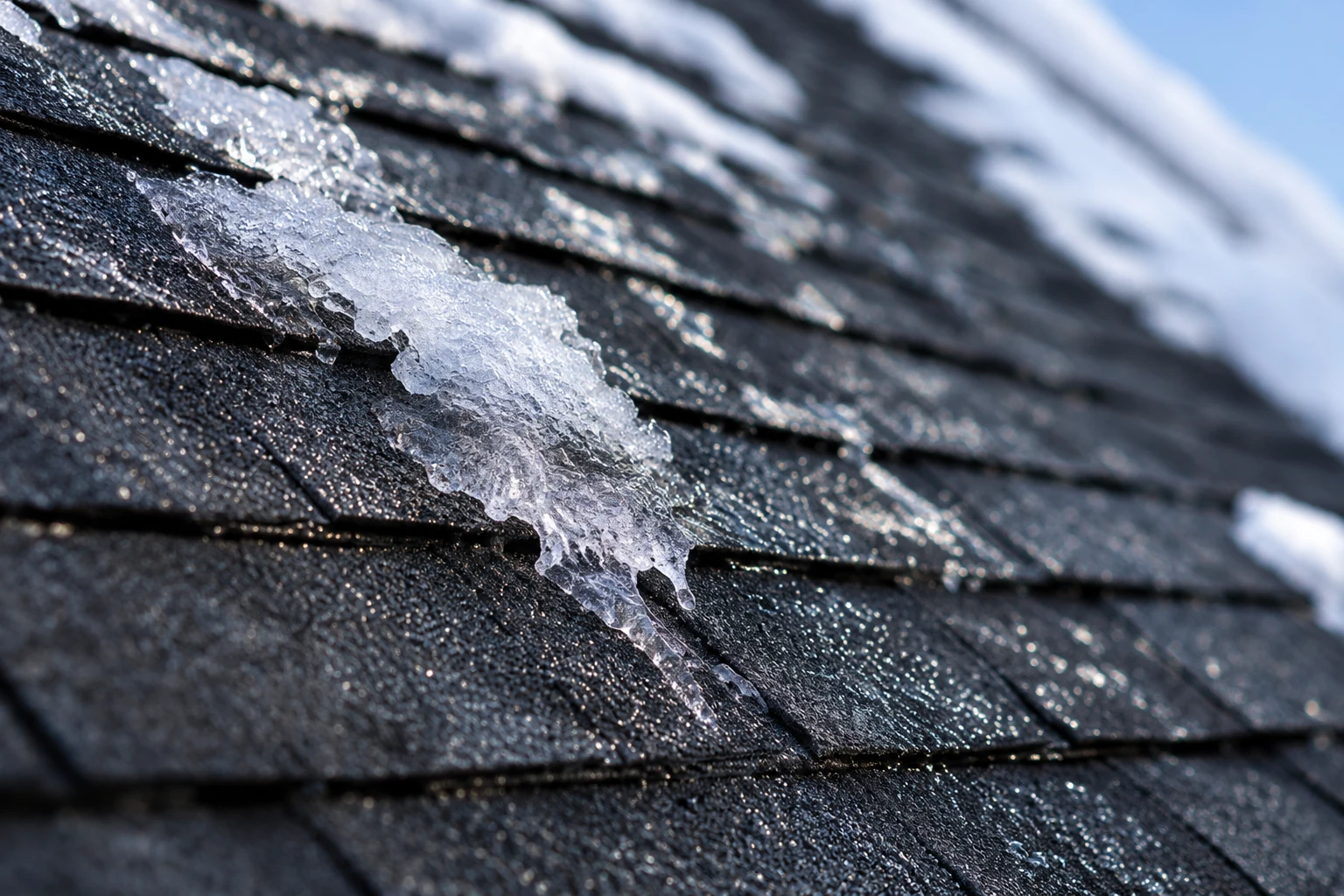
On a steep roof, meltwater runs to the gutters in seconds rather than sitting on the surface. Shingles and panels are designed to overlap like fish scales, so water flowing downhill passes over each joint instead of into it. When pitched roofs leak, it’s usually at an edge, a valley or a penetration.
Less Snow Buildup
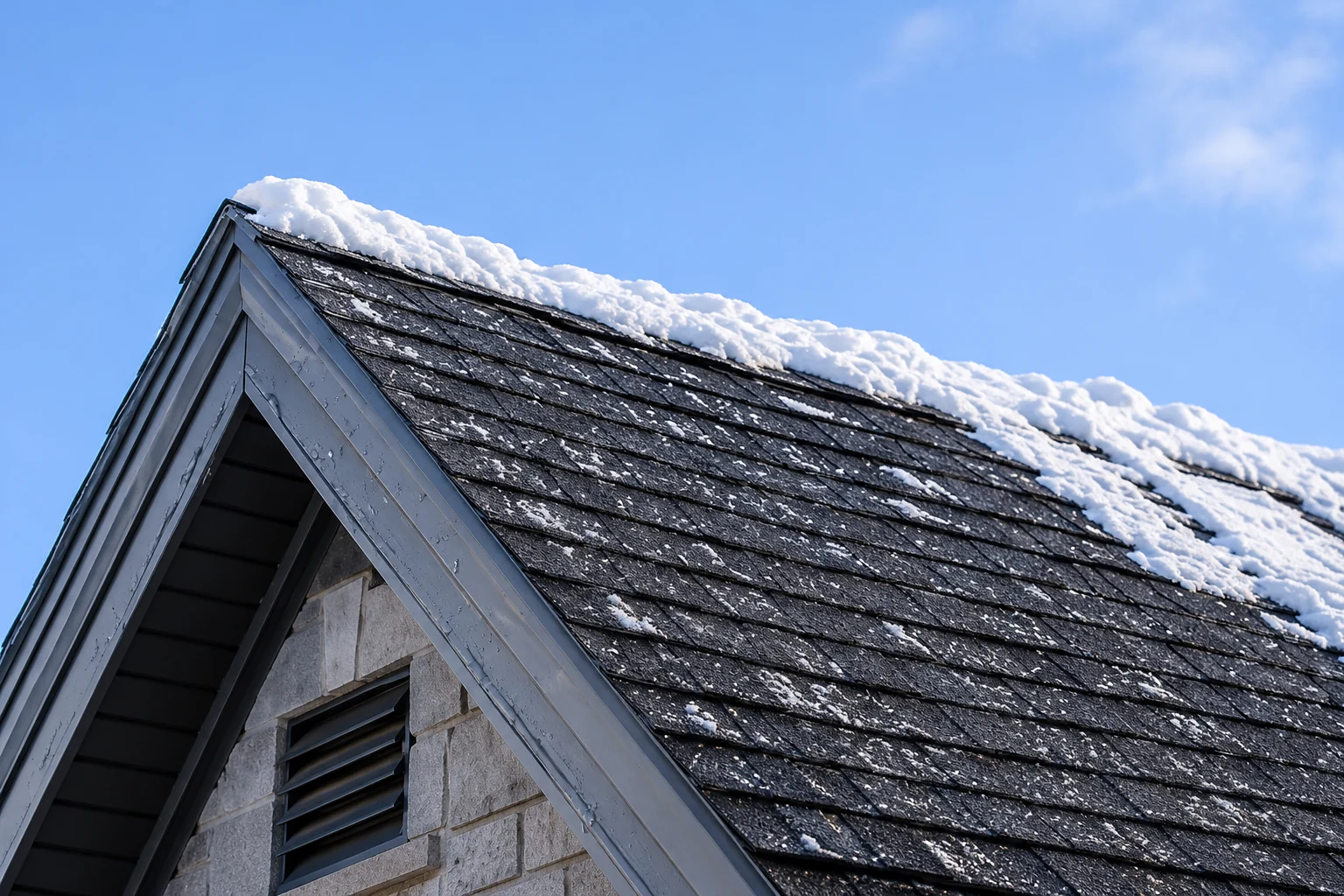
Snow doesn’t stay on a steep roof the same way it settles on a flat one. On a very steep pitch or a smooth metal surface, it often slides off after a storm or once the sun warms it. On textured asphalt shingles at a moderate pitch, snow tends to stay put longer. That’s normal, and a properly framed roof is built to carry it.
Where Do Steep Slope Roofs Struggle?
Gravity works well in the open field of a roof. It works less well wherever water changes direction, slows down or meets something cold.
At the Eaves
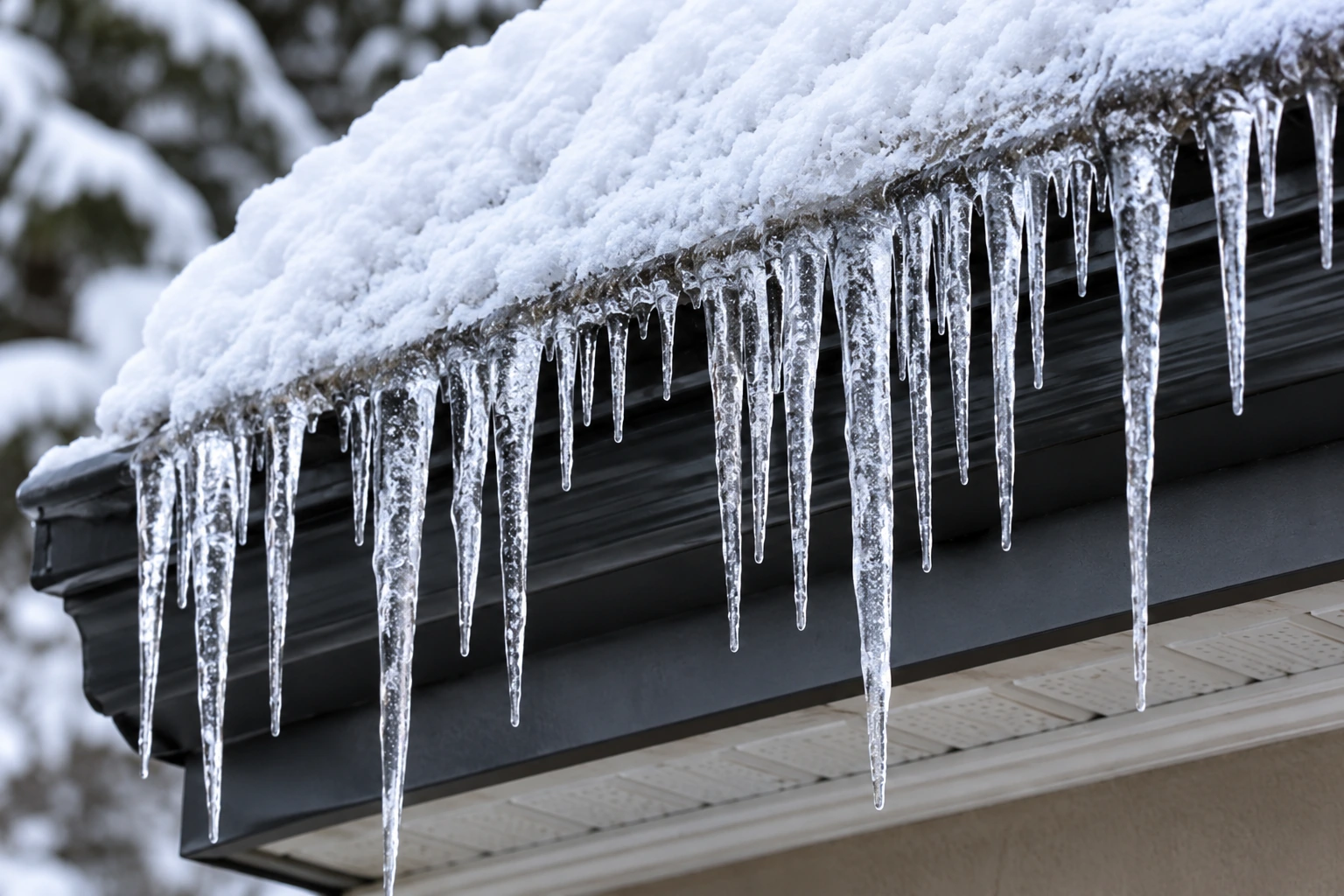
The eaves hang past the heated part of the house, so they’re the coldest part of the roof. Meltwater running down from warmer sections can refreeze there and build an ice dam. We covered the full cycle in our guide to ice damming in Toronto, but the short version is that a steep slope roof isn’t immune. It depends on attic insulation and ventilation to keep the whole deck evenly cold.
In Valleys
Valleys are where two roof planes meet, and they carry water from both sides. In winter they also collect drifting snow and ice. A valley that’s poorly flashed or lined only with standard underlayment is one of the most common winter leak points we find.
Around Chimneys, Skylights and Vents
Anything that breaks through the roof creates a joint water can reach. Snow piles up on the uphill side of a chimney, melts against the warm masonry and works its way into any gap in the flashing.
Under Heavy, Wet Snow
Toronto often gets heavy, wet snow, especially early and late in the season. Wet snow weighs far more than dry powder, and a roof carrying several layers of it after a few storms is under real load. Older framing or sagging sections deserve a closer look before winter.
Which Design Details Protect a Pitched Roof in Winter?
A good steep slope roof is a layered system. The shingles or panels are the part you see, but most of the winter protection sits underneath.
Eave Protection Membrane
A self-adhering ice and water membrane installed along the eaves is the main backup if an ice dam forms. It seals around nails and holds back water that’s pushed uphill under the shingles. Ontario’s building code calls for eave protection on most shingled roofs, and we treat it as standard on every steep slope job, not an upgrade.
Valley Lining
Valleys get the same membrane, run the full length, before any shingles or metal go on top. Some roofs also use an open metal valley, which gives water and ice a smooth channel to slide down.
Proper Flashing
Step flashing along walls, counter flashing on chimneys and correctly installed boots on vents keep water out of the joints. This is detail work. A roof can have the best shingles on the market and still leak in February if the flashing was rushed.
Attic Ventilation and Insulation
Ventilation keeps the roof deck cold so snow melts slowly and evenly. Insulation and air sealing keep house heat from reaching the deck in the first place. Together they solve most winter roof problems before they start, which is why we check the attic on every steep slope inspection.
Snow Guards on Metal Roofs
Metal roofs shed snow fast, sometimes all at once. Over entrances, walkways, decks or lower roofs, that can be dangerous. Snow guards break up the slide so snow comes off in smaller amounts or melts in place.
How Do Different Steep Slope Materials Compare in Winter?
| Asphalt Shingles | Metal | Slate | Cedar Shake | |
| Snow shedding | Holds snow longer | Sheds fast | Moderate | Holds snow longer |
| Ice dam resistance | Relies on eave protection | Better with snow guards and ventilation | Relies on eave protection | Relies on eave protection |
| Weight on structure | Light | Light | Heavy | Light to moderate |
| Winter watch point | Lifted or curled shingles | Sliding snow over walkways | Cracked tiles | Moisture and rot |
No material is “winter proof” on its own. Each one performs well in a Toronto climate when the layers underneath are installed correctly. If you’re also weighing panel types, our breakdown of standing seam vs metal shingles vs corrugated covers how each metal option behaves. And if you haven’t settled on a roofing system yet, start with our comparison of flat, metal or steep slope roofing.
What Should You Check Before Winter?
A quick look in the fall can catch most problems while they’re still easy to fix:
- Clear gutters and downspouts so meltwater has somewhere to go
- Look for lifted, curled or missing shingles from the ground
- Check flashing around chimneys and skylights for gaps or rust
- Look in the attic for frost, damp insulation or daylight through the deck
- Note any ceiling stains near exterior walls from last winter
Our full checklist for preparing your roof for a GTA winter goes through each step in more detail. If you spot something, it’s worth getting a roofer to look before the first big storm. Fixing flashing in November is a short job. Fixing it in January, with snow on the roof and water in the attic, isn’t.
When Should You Call a Roofer?
Call a roofer if you’ve had leaks or ice dams in past winters, if your roof is getting older and you don’t know what’s underneath the shingles, or if you see sagging or water stains inside. Please don’t climb onto a snowy or icy pitched roof yourself. It’s one of the most dangerous jobs around a home, and a roof rake used from the ground is a much safer way to clear the lower edge.
Get Your Pitched Roof Ready for Winter
Jerry’s Roofing and Renovation is a family-owned, full-service roofing contractor serving Toronto and the Greater Toronto Area. We install and repair steep slope roofs every season, and we’re happy to check yours before the snow settles in.
Contact Jerry’s Roofing and Renovation to book a steep slope roof inspection.